
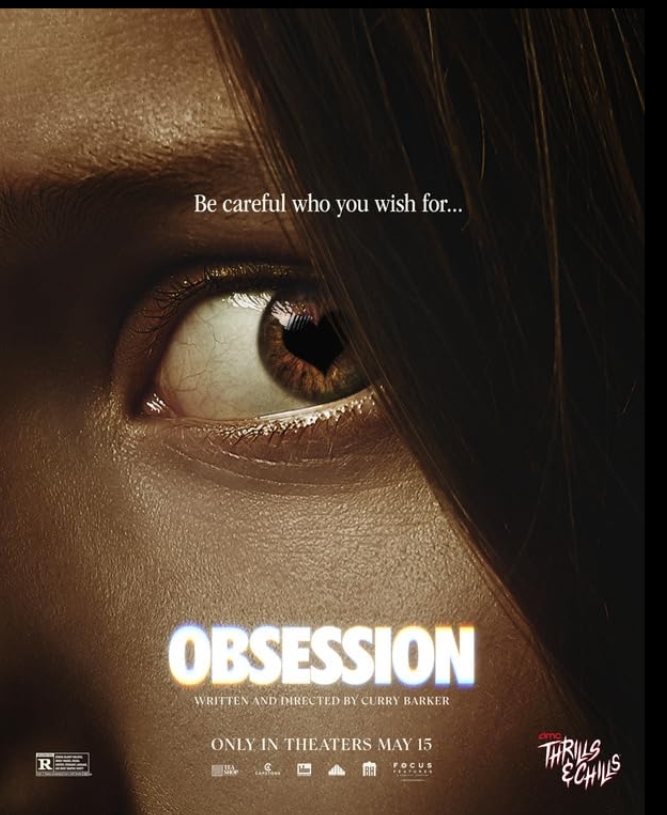
There is something uniquely unsettling about a horror film that feels emotionally plausible. Not plausible in the supernatural sense — Obsession is built around a cursed wish object and spirals into increasingly surreal territory — but plausible in the way it understands loneliness, entitlement and the dangerous fantasy of being loved unconditionally. That is what makes Curry Barker’s Obsession linger long after the credits roll.
After gaining significant attention at the Toronto International Film Festival, Obsession arrives with the sort of online buzz horror films rarely earn without a franchise attached. Barker, previously known for his YouTube filmmaking and the cult success Milk & Serial, directs with surprising confidence for a filmmaker making his theatrical breakthrough. More impressively, he avoids the temptation to turn the film into a shallow “internet culture” satire. Instead, Obsession becomes something far more uncomfortable: a modern morality tale about emotional desperation.
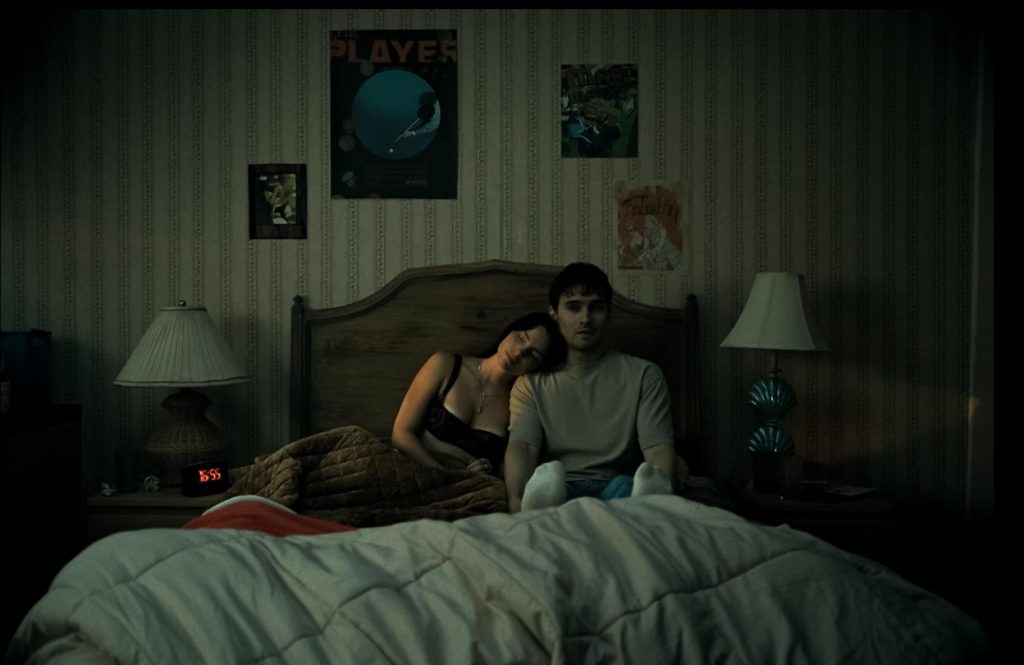
The premise initially sounds deceptively familiar. Bear, played with awkward restraint by Michael Johnston, works in a music shop alongside his childhood friend Nikki (Inde Navarrette). Quietly obsessed with her but incapable of expressing his feelings honestly, he discovers a strange object known as the “One Wish Willow” and wishes for Nikki to love him more than anyone else in the world. Predictably, the wish goes catastrophically wrong.
What follows is not simply a possession story or a conventional stalker thriller. Barker uses the supernatural framework to explore a darker question: what happens when fantasy replaces genuine human connection? Nikki’s affection mutates into suffocating dependency, paranoia and violence, while Bear slowly realises that being adored is not the same thing as being understood. The film’s horror does not come solely from jump scares or gore — though it contains moments of genuine brutality — but from watching two people trapped inside a warped version of intimacy.
Obsession is less interested in mocking socially isolated men than examining the emotional consequences of viewing love as something owed, earned or magically obtainable. Bear is not written as a cartoon villain. He is recognisably human: insecure, passive and emotionally immature. That nuance makes the film significantly more disturbing.

Inde Navarrette delivers the film’s standout performance. Nikki could easily have become a one-dimensional “crazy girlfriend” archetype, but Navarrette gives her an unnerving emotional volatility that shifts scene by scene. At times she appears vulnerable and childlike; moments later she becomes terrifying. The film’s most effective scenes rely not on visual spectacle but on the unpredictability of her behaviour. You never entirely know whether Nikki is acting from supernatural corruption, buried emotional truth or some combination of both.
Visually, Obsession is remarkably assured for a film reportedly produced on a budget below $1 million. Barker leans heavily into claustrophobic interiors, muted lighting and long periods of quiet tension. The music shop setting becomes increasingly oppressive as the film progresses, transforming from a nostalgic indie-romance backdrop into something suffocating and uncanny. There are shades of early David Cronenberg and even echoes of Carrie or The Fly in the film’s fascination with bodily and emotional transformation, though Barker’s voice still feels contemporary rather than imitative.
The pacing will divide audiences. Obsession spends a long time building emotional discomfort before fully embracing its horror elements, and viewers expecting relentless scares may find the slower middle section frustrating. Yet the patience largely pays off. Barker understands that dread is often more effective when allowed to simmer.
Where the film truly succeeds is in its refusal to offer easy catharsis. Many modern horror films soften their darker themes with irony or emotional reassurance. Obsession does neither. It forces its audience to sit with the ugliness of dependency, manipulation and romantic idealisation. Even the supernatural mechanics become secondary to the emotional damage underneath.

For university audiences especially, the film feels strangely timely. Beneath the horror framework is a sharp portrait of contemporary emotional isolation — the confusion between attention and affection, the performance of intimacy, and the quiet panic of people who do not know how to communicate honestly. It is a film about obsession in the literal sense, but also about the increasingly transactional way relationships are imagined online.
Obsession is not flawless. Some secondary characters feel underdeveloped, and the final act occasionally sacrifices emotional clarity for shock value. Yet even its rough edges contribute to the film’s intensity. Horror rarely feels this personal anymore.
More than anything, Obsession marks Curry Barker as a filmmaker worth paying attention to. Many directors can create disturbing imagery. Far fewer understand how to create emotional unease that follows viewers out of the cinema.
Obsession is not merely frightening; it is recognisably sad. And that sadness is what makes it so effective.
This movie is showing at Showcase Cinema de Lux Southampton, the ultimate student spot. Experience luxury with recliner seats and enjoy unbeatable value with their “Saver Mondays,” making blockbusters super affordable for your student budget. Catch your next film here: Showcase Southampton