

As universities start back up for another year, young people are being urged to know the symptoms of meningitis.
The latest UK Health Security Agency figures report that in 2025/26 MenB was responsible for 97% of invasive meningococcal disease cases in 15–24-year-olds.
What is meningitis?
Meningitis is an infection of the protective membranes surrounding the brain and spinal cord.
Meningococcal bacteria can cause serious illnesses, including meningitis and septicaemia.
So, what symptoms should students look out for?
Symptoms can include:
- High temperature
- A stiff neck
- Joint and muscle pain
- A worsening headache
- Sensitivity to bright lights
- Vomiting
- A rash that does not fade when pressed with a glass
- Fatigue
- Confusion, being very sleepy or being difficult to wake
- Seizures
- Cold hands and feet
- Rapid breathing
Do not wait for all symptoms to appear. Meningitis can become life-threatening very quickly.
If you think you or someone you know could have meningitis, seek urgent medical help.
Call 999 or go to your nearest Accident and Emergency (A&E) department.
Alternatively, if you are unsure whether your symptoms are serious, contact NHS 111 for advice and support.
How does meningitis spread?
The bacteria that can cause meningitis spread through close and prolonged contact with someone who is carrying them.
Contact with a person’s saliva, such as through kissing or sharing drinks, or prolonged close contact, such as living with someone, can contribute to the spread.
A person can carry meningococcal bacteria without being ill themselves. This is known as being an asymptomatic carrier.
How can you reduce the risk?
1. Get vaccinated
Vaccination is the most effective way to reduce the risk of developing meningitis.
The NHS is currently offering free MenB vaccinations to certain young people, including some university students. Eligibility depends on your date of birth and whether you are starting university for the first time this year.
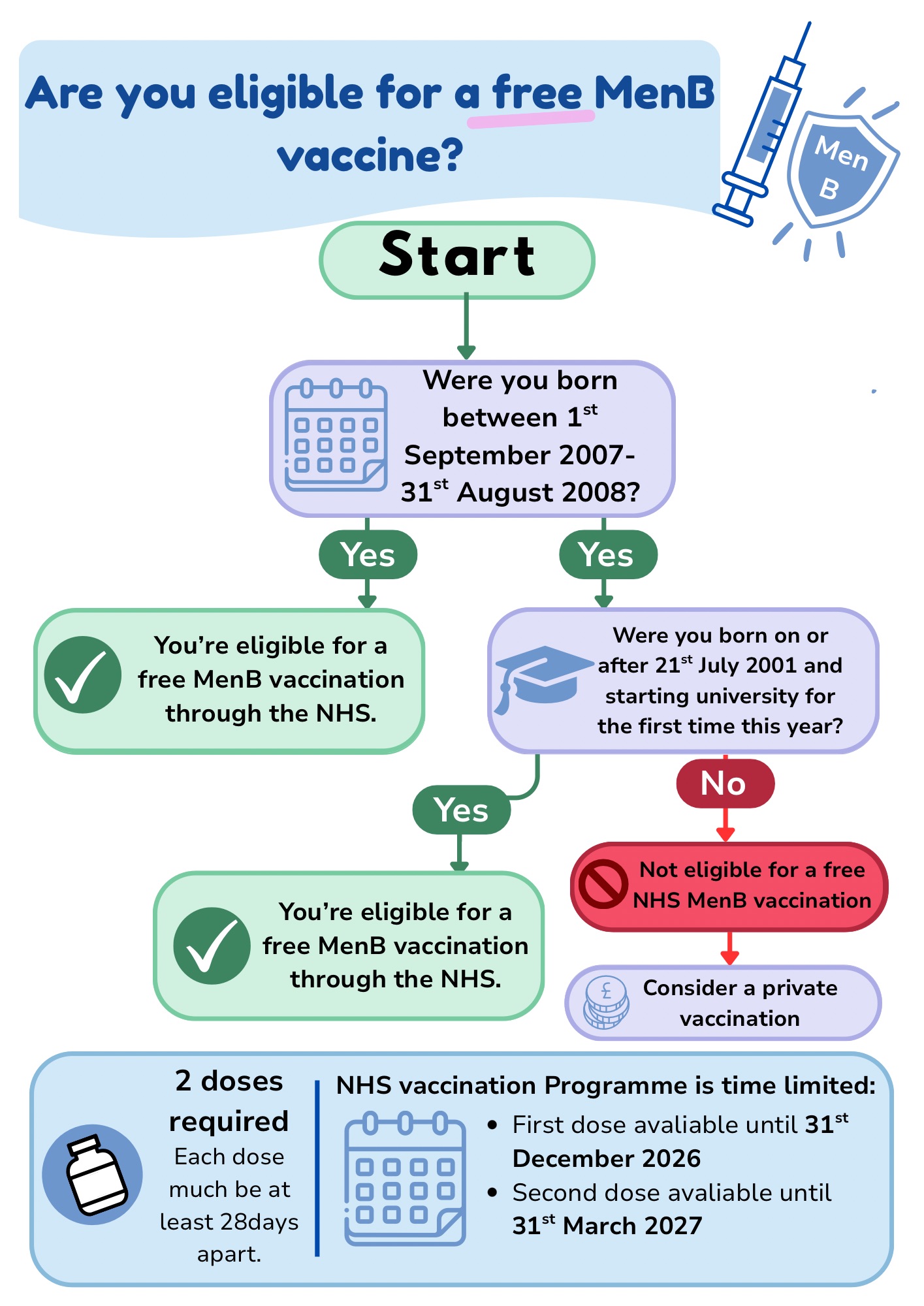
Know the symptoms of meningitis and seek urgent medical help if you suspect the infection.
To find a pharmacy offering the vaccine, or to check your eligibility, visit the NHS website.
If you are not eligible, Boots also offers the vaccination privately.
2. Avoid sharing drinks and vapes
Practise good hygiene, wash your hands regularly and avoid sharing personal items such as cups, cutlery or vapes, or anything else that comes into contact with saliva.
3. Know the symptoms
Knowing the symptoms and acting quickly could be lifesaving.
Seek medical help if needed.