
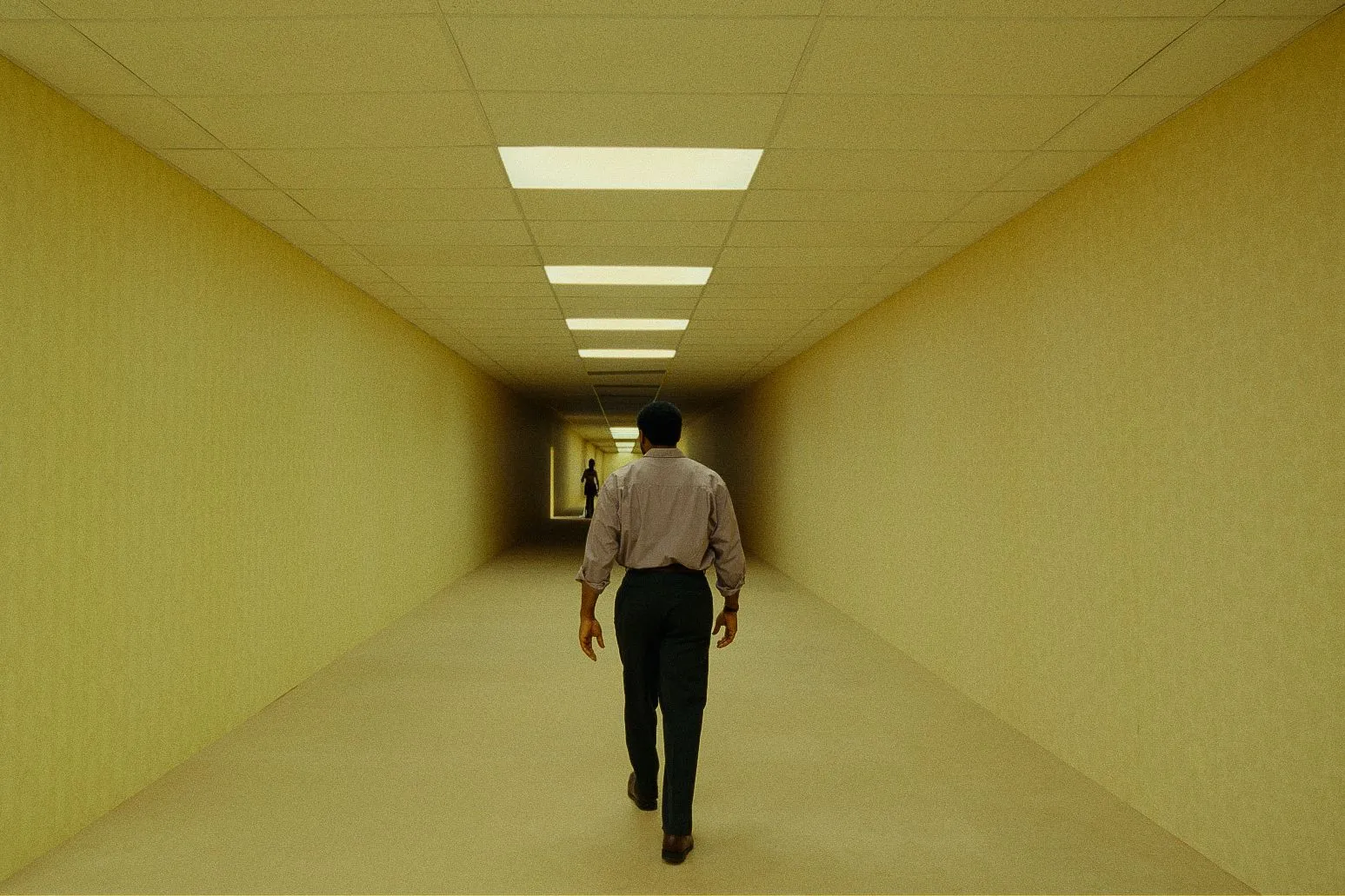
If you’ve spent any time on the internet over the past few years, you’ve probably come across the backrooms in some way, shape or form; Whether through creepypastas, surreal images, Youtube videos, games, the backrooms have become one of the internet’s most recognisable horror concepts in recent years. That’s why it’s so exciting to see the series make the jump to the big screen with its original creator Kane Parsons behind it. The fact that someone who started off creating a web series on his laptop with the help of Blender, is now directing a feature film adaptation at just 20 years old makes the project feel even more special and serves as a testament to both his talent and the impact the backrooms have had on internet culture.
While Backrooms uses horror staples we have seen before (found footage, jumpscares), it never feels derivative. Instead, it takes these familiar tropes and reworks them into something that feels fresh and unlike anything I’ve ever seen before. Parsons grew up as a gamer, which shows in the film, through unique first person shots and disturbing imagery and quirks adapted from games brought to the big screen. The set design and cinematography captured the “liminal spaces” concept so perfectly, and whats even more impressive is knowing they actually built roughly 30,000 square feet of actual backrooms to film in. This sort of commitment to building a believable fictional world instead of relying on digital effects really pays off throughout the film, as you find yourself getting lost alongside the main characters Clark (Chiwetel Ejiofor) and Mary (Renate Reinsve). The endless yellow corridors and seemingly impossible walkways feel so tangible and real, allowing us to truly immerse in the Backrooms, it was so captivating to watch and I really have to commend Parsons’ creativity. The sound design only elevates this concept; the constant humming of the fluorescent lights, the ambient noise and the distant echoes created a tense atmosphere where you just don’t know what is lurking around those corners. The end result is something nightmarish, surreal, and almost Lynchian in some ways and I loved getting immersed into it.
Spoilers ahead…
After a tense found footage sequence, we are introduced to Clark, a failed architect who works in a discount furniture shop, and following his marriage breaking down, he also sleeps in said furniture shop. When some of the electrics start to malfunction at night, Clark investigates the basement, which is where he finds a wall that he can pass through, leading to a never-ending array of yellow rooms and surreal passageways. He becomes fixated on these rooms and wishes to find out more, but this eventually leads to him becoming lost and not returning.
When he fails to return, his therapist Mary visits the store to look for him. Previously Clark had told her about these rooms, and she brushed off his claims as delusional ramblings, but upon going down to the basement herself, Mary finds that Clark was telling the truth all along.
Mary and Clark find each other in one of the rooms, and it becomes clear that Clark has become so absorbed in this liminal space that he feels a sense of belonging that he didn’t feel in the real world, and consequently wants to stay down there. Mary unsuccessfully tries to convince Clark to find a way out with her, but it’s too late and Clark is too far gone. This is an interesting commentary on mental health, where someone experiences so much trauma, they lose their sense of self and will cling to anything that gives them a sense of purpose and belonging. Clark was already at risk in the real world of succumbing to a deeper mental health issue, but the backrooms unfortunately only exasperated this by warping his brain and making him slip beyond the cracks of reality, allowing him to avoid any sort of recovery or accountability at all.
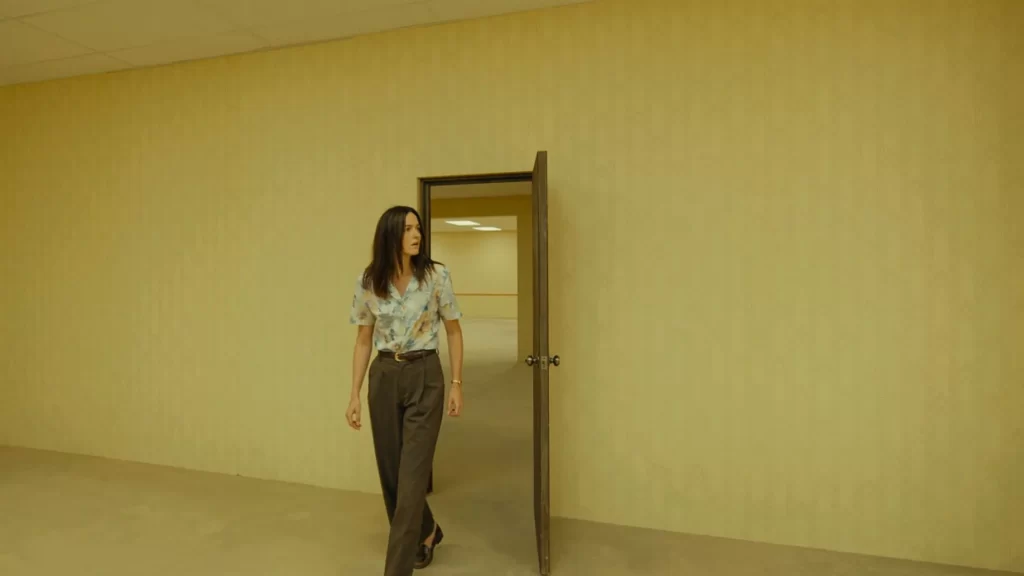
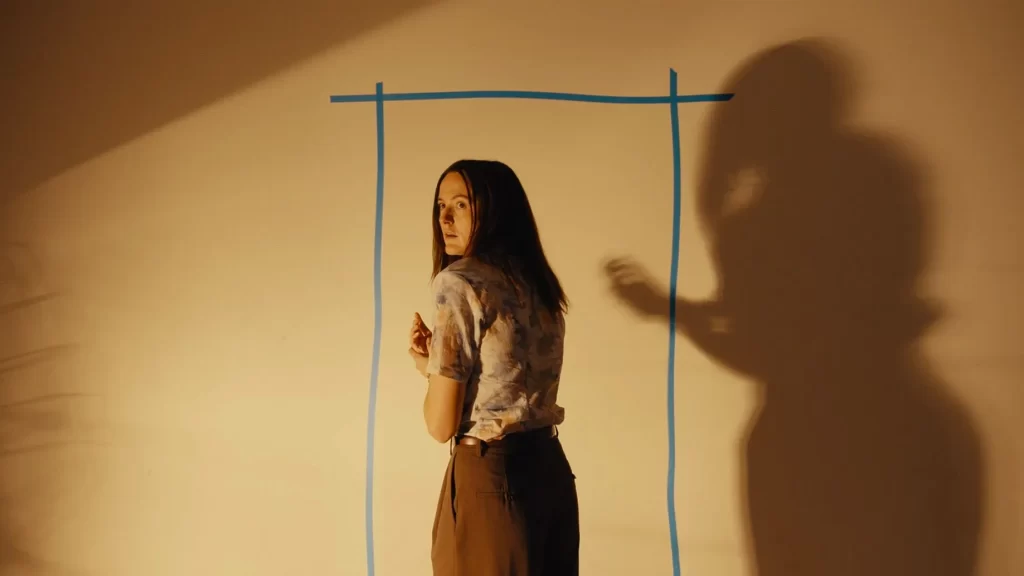
The film briefly shows some of Mary’s traumatic past involving her abusive mother, but this does feel a bit undercooked compared to what we know about Clarks past and how it impacts him in the present. The moments of Mary’s past we are shown do give us context as to who Mary is, though I wish we got to see these memories manifest into her present decisions and psychological state, so that her trauma could have been a compelling layer of characterisation rather than a small detail of her character. While I do wish her character was explored more, I do wonder if keeping her history limited was an intentional choice. Throughout the film, the Backrooms themselves evolve, gradually becoming more abstract and detached from their original form and losing many of the defining details. There is a montage of the backrooms developing where we see the room become more distorted and incorrect as it goes deeper and deeper. This visual progression can be read as a metaphor for human memory and trauma. Over time, painful experiences are often suppressed or fragmented by our brains as a survival mechanism. In this sense, Mary’s trauma does not manifest in conventional ways because even she may not even fully grasp its significance anymore. The erosion of the Backrooms mirrors the erosion of memory itself, and in Marys case what remains is not a clear recollection of her suffering but a vague emotional impact.
As Marys narrative takes over following Clarks demise, the ending is horrifying. We don’t see any clear resolve for Mary, instead we see her stuck in the backrooms, completely distorted from what she was before. This can be interpreted in different ways, whether Async left her down there to rot as she knew too much, or maybe she couldn’t free herself from the darkest parts of her psyche the same way Clark couldn’t. Either way, it’s pretty bleak.
Backrooms balances the extensive online lore around the existing concept with it’s own original story, making it enjoyable for both long-term fans and newcomers. Instead of overwhelming viewers with references, Parsons uses the existing concept as a foundation while telling a story that can stand on it’s own. As a result, it feels equally suited to viewers who have followed the series for years and those encountering it for the first time, which is such a smart approach as this may mark the moment the backrooms truly break into the mainstream. If you liked Vivarium (2019), Skinamarink (2022) or The Shining (1980), this is the film for you!
This movie is showing at Showcase Cinema de Lux Southampton, the ultimate student spot. Experience luxury with recliner seats and enjoy unbeatable value with their “Saver Mondays,” making blockbusters super affordable for your student budget. Catch your next film here: Showcase Southampton