
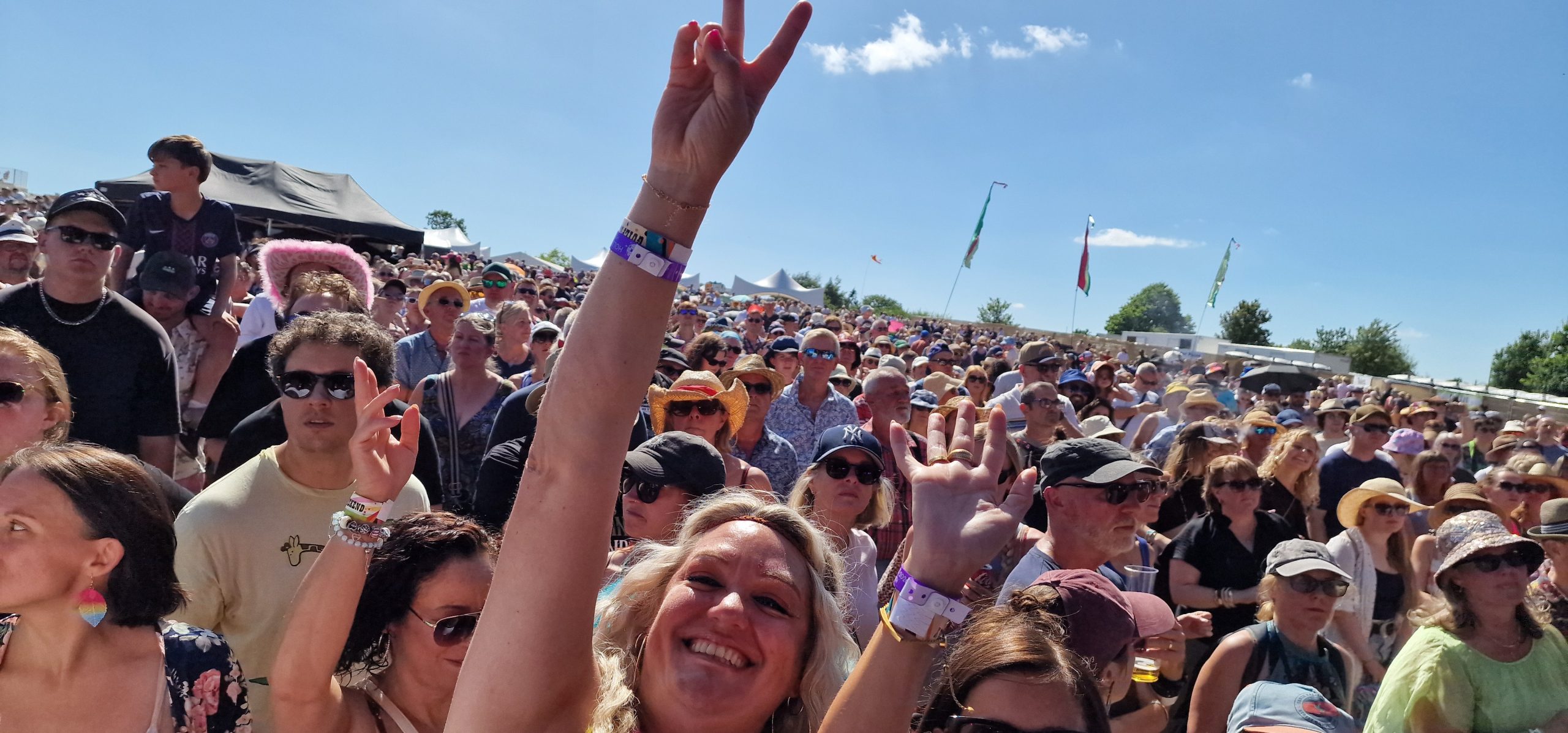
GuilFest returned to Stoke Park in Guildford with two days of music, nostalgia, family entertainment and a genuinely welcoming atmosphere. Although sound delays, limited vegetarian food and a serious lack of shade stopped the weekend from reaching its full potential, this remains one of the most manageable and friendly festivals around.
I attended GuilFest 2026 with my family, and by the time we left Stoke Park on Sunday night, the overwhelming feeling was that we had enjoyed a proper old-fashioned festival weekend.
GuilFest does not have the enormous stages, sprawling campsites or international superstars associated with festivals such as Glastonbury, Reading or the Isle of Wight. It is a much smaller event, with a daily capacity of around 10,000 people, but that is also one of its greatest strengths. You can move around without spending half your day walking, families do not feel swallowed by huge crowds, and there is a friendliness that is often lost at larger commercial festivals.



Held at Stoke Park on 4 and 5 July, GuilFest offered seven stages and a line-up covering pop, indie, ska, dance, rock, tribute acts, local performers, comedy and acoustic music. Saturday’s bill included Sophie Ellis-Bextor, Rudimental, The Lottery Winners, ABC, Inspiral Carpets, Tiffany, Echobelly and Dutty Moonshine Big Band. Sunday brought The Proclaimers, Kula Shaker, Kid Creole and the Coconuts, Haircut 100, Heather Small, T’Pau and Neville Staple, among many others.
With so much happening at once, it was impossible to see every act in full. That is always the challenge at a multi-stage festival. However, the range of artists meant that most visitors could find something they recognised while also stumbling across performers they might never have chosen to see elsewhere.
Saturday: pop, disco and indie nostalgia
Saturday’s programme was particularly strong for anyone who grew up with 1980s and 1990s pop and indie music, while still offering enough modern energy to prevent the day from feeling like a nostalgia convention.



The inclusion of artists such as Tiffany, ABC, Inspiral Carpets and Echobelly gave the bill a familiar feel. These are names that immediately bring back memories for older festivalgoers, but many of their songs have also reached younger audiences through streaming, films, television and social media.
That mixture of generations was visible throughout the weekend. Parents who remembered buying the original records stood alongside teenagers and younger children hearing some of the music live for the first time. GuilFest handled that crossover particularly well. It was not aimed only at older music fans, nor did it try desperately to appear fashionable to a younger crowd.
ABC remain one of the most recognisable names from the sophisticated pop sound of the early 1980s. Their presence suited GuilFest perfectly: stylish, melodic songs that people know even when they cannot immediately remember the title. A festival crowd does not always need a completely new musical experience. Sometimes it simply wants to hear great pop songs performed in the sunshine, and ABC represented that part of the line-up well.
Inspiral Carpets and Echobelly brought a different type of nostalgia. Their music carried the sound of British alternative and indie culture, giving Saturday more depth than a straightforward collection of pop hits. GuilFest’s line-up worked because it moved between genres rather than leaving every stage sounding the same.
The Lottery Winners were another strong booking. They brought a more contemporary energy to a bill containing so many established names. Their presence helped connect the different generations in the crowd and gave the programme a sense that GuilFest was looking forward as well as backwards.
Dutty Moonshine Big Band were among the weekend’s most interesting bookings. Their combination of brass, dance beats and theatrical festival energy was exactly the sort of performance that works in an outdoor setting. They provided a change of pace from the more familiar guitar and pop acts, demonstrating why variety is so important at a festival of this size.
Elsewhere, Elvana offered the wonderfully strange sight and sound of Elvis meeting Nirvana, while Daft Funk Live, Bob Marley Revival, Uncle Funk’s Disco Inferno and Phats & Small kept the party atmosphere moving in different corners of the site. The tribute and themed acts were not simply there to fill gaps. They created some of the easiest and most enjoyable festival moments because audiences could arrive halfway through a set and immediately join in.
That accessibility matters at GuilFest. You might be on your way to buy a drink, find your family or visit another stage and suddenly hear a song you know. Ten minutes later, you are still standing there dancing.
Sophie Ellis-Bextor brings the Saturday-night sparkle
Sophie Ellis-Bextor was a natural choice for the main Saturday headline position. Her music has enjoyed a major revival in recent years, but she has never really disappeared. Songs such as “Get Over You”, “Take Me Home”, “Heartbreak (Make Me a Dancer)” and, of course, “Murder on the Dancefloor” were made for a summer festival crowd.
What makes Sophie Ellis-Bextor such an effective festival performer is the sense of celebration surrounding her music. It is polished pop, but it does not feel distant or overly serious. Her appeal crosses age groups, from those who remember her early releases to younger listeners who discovered “Murder on the Dancefloor” decades later.
Saturday evening increasingly felt like one large outdoor disco. People who had spent the afternoon sitting on picnic blankets or moving casually between stages were suddenly on their feet. That transformation is exactly what a headliner should achieve.
Sophie brought glamour to the festival without losing the relaxed, family atmosphere that had defined the day. Her songs were familiar enough for casual listeners, while dedicated fans still had plenty to enjoy. She looked completely at home at an event where children, parents, students and lifelong music fans were all sharing the same space.
Rudimental’s DJ set added another dimension to Saturday. Booking a dance act alongside Sophie Ellis-Bextor gave the evening a more energetic finish and prevented the programme from becoming too dependent on retro pop and guitar music.
A full Rudimental live show would perhaps have been even more powerful, but the DJ set still delivered the dance-focused atmosphere many people wanted. For younger festivalgoers in particular, it gave Saturday night something closer to a club or large dance tent experience.
The two bookings complemented each other. Sophie provided personality, songs and pop spectacle, while Rudimental brought bass, rhythm and a later-night festival feel.
Sunday: singalongs, ska and enduring songs
Sunday’s programme leaned even more heavily into well-known names, singalong songs and bands with decades of history behind them.



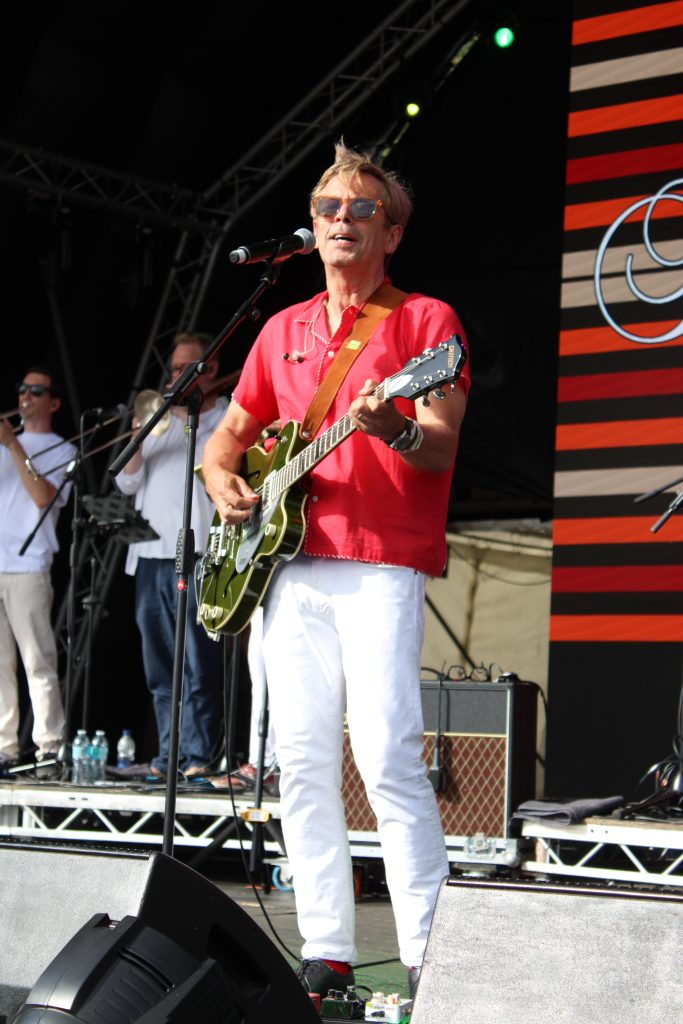
T’Pau and Heather Small were sensible afternoon festival bookings because both have voices and songs that immediately connect with a broad audience. Heather Small’s distinctive vocals remain instantly recognisable, while T’Pau brought another wave of 1980s nostalgia.
Kid Creole and the Coconuts added colour and theatricality. Their mixture of Latin, disco, funk and pop offered something different from the indie and rock acts elsewhere on the bill. At a festival, visual personality can be almost as important as the music, particularly during daytime performances when audiences are spread across a large field.
Kula Shaker gave Sunday one of its stronger rock elements. Their blend of psychedelic influences and 1990s alternative music still sounds suited to a festival stage. They helped lift the energy as the day moved towards its headline performances.
Neville Staple brought the sound and attitude associated with The Specials, while other parts of Sunday’s programme featured Hugh Cornwell, The South, The Smyths, Letz Zep, The Bootleg Beatles and The Dolly Show. This was a line-up designed around songs people already loved.
Some festival purists may argue that there were too many heritage and tribute acts, but that would miss the point of GuilFest. This is not an event attempting to predict the next major trend in music. It is a community festival offering two enjoyable days to a mixed audience.
Tribute acts also have a valuable role at family festivals. A child may not know the history of The Beatles or Led Zeppelin, but they may recognise the songs. Meanwhile, parents and grandparents can enjoy hearing familiar music without paying arena prices.
The Bootleg Beatles are particularly suited to this environment because the catalogue is almost universally known. Their performance could appeal to several generations at once, which is GuilFest’s greatest strength.
Haircut 100 and the frustrating sound delay
Haircut 100 were one of the acts I had been looking forward to, but their appearance was affected by technical problems.
The band eventually came on approximately 25 minutes late because of sound issues. A delay of that length may not appear disastrous, but festival schedules are tightly packed. When one act starts late, the problem can spread through the rest of the evening, particularly for visitors trying to move between stages.
Some people had planned their day carefully and wanted to catch parts of several performances. The delay forced them to choose between staying with Haircut 100 or leaving before the end to reach another act.
It was frustrating because the problem was not the band’s fault. Haircut 100 have the perfect collection of light, upbeat songs for a sunny festival afternoon. “Fantastic Day”, “Love Plus One” and “Favourite Shirts” all carry the sort of cheerful energy that should have made the set one of Sunday’s easiest highlights. The festival itself had promoted those songs as part of the anticipation surrounding the band’s appearance.
Once the performance finally got underway, the audience remained supportive. That said, the delay exposed an area where GuilFest needs to improve. Sound problems happen at live events, but there appeared to be wider concerns about the main-stage sound during parts of the weekend.
For most of the festival, the organisation was impressively smooth, which made these technical issues stand out more sharply. Better contingency planning and quicker technical changeovers would help protect the schedule in future years.
The Proclaimers provide a fitting finale
The Proclaimers were an ideal Sunday headliner for GuilFest.
They are not a band that depends on enormous video screens, elaborate choreography or expensive special effects. Their strength comes from direct, memorable songwriting and the connection those songs create with an audience.
Tracks including “I’m on My Way”, “Letter from America”, “Sunshine on Leith” and “I’m Gonna Be (500 Miles)” have become part of British popular culture. Even people who would not describe themselves as Proclaimers fans tend to know the words.
That made the closing performance feel communal rather than distant. Families who had spent two days wandering the site came together for a final mass singalong. “I’m Gonna Be” was always going to create one of the biggest reactions of the weekend, but the emotional warmth of “Sunshine on Leith” also demonstrated that The Proclaimers have much more to offer than one famous chorus.
They were a fitting conclusion because their music reflects much of GuilFest’s personality: unpretentious, familiar, warm and intended to be shared.
There are festivals where the headline performance feels like a production being presented to an audience. At GuilFest, the strongest moments felt as though the audience was part of the performance.
A festival that genuinely welcomes families
GuilFest describes itself as a family festival, and this was not simply a marketing phrase.
Children were not treated as an inconvenience or pushed into one small corner of the site. Families appeared to be part of the festival’s identity. There were activities including a kids’ area, bushcraft, games, workshops, street entertainment, arts and crafts, comedy and other attractions alongside the music.
Chase from Paw Patrol appeared on Saturday, while The Gruffalo held meet-and-greet sessions on Sunday. The Gruffalo may not have been one of the musical headliners, but judging by the reaction from younger visitors, it was certainly one of the most important appearances of the weekend.
That is where GuilFest succeeds in a way many larger festivals do not. It offers attractions for children without making the entire event feel like a children’s show. Adults could still watch bands, visit the bars, enjoy comedy and dance late into the evening.
The crowd was also remarkably friendly. We saw very little trouble, aggression or antisocial behaviour. Security staff were visible and effective but generally relaxed. They did not create an intimidating atmosphere, and most interactions appeared calm and sensible.
It genuinely felt like a community event. People helped each other, made room for families and chatted to strangers. There were teenagers, young children, older couples, groups of friends and serious music fans, yet the different parts of the audience mixed comfortably.
For parents who find the scale of major festivals overwhelming, GuilFest offers a much more manageable alternative.
Clean toilets deserve recognition
Festival toilets are rarely the most glamorous subject, but they can have a major effect on the overall experience.
The toilets at GuilFest were impressively clean throughout the weekend, particularly when compared with facilities at some much larger festivals. They appeared to be serviced regularly, and we did not encounter the sort of conditions that can make using festival toilets an ordeal.
That may sound like a small detail, but for families, older visitors and people with health conditions, it matters enormously.
The rest of the site was also generally tidy. Despite thousands of people eating, drinking and moving around Stoke Park, the festival did not become overwhelmed by rubbish.
The layout was straightforward, and moving between the main areas was relatively easy. One of the pleasures of a smaller site is that missing the first half of a performance does not feel inevitable. At some major festivals, it can take 30 or 40 minutes simply to cross from one stage to another. GuilFest felt compact enough to explore without becoming confusing.
Vegetarian food was far too limited
The food selection was one of the weaker parts of the weekend, particularly for vegetarians and vegans.
As a vegetarian who genuinely enjoys festival food, I expected more choice. Curry and pizza appeared to be the two most consistent options, and although both were perfectly acceptable, eating variations of the same meals across an entire weekend quickly became repetitive.
A modern family festival should be able to offer more than one or two dependable vegetarian choices. Falafel, wraps, noodles, loaded fries, plant-based burgers, Mexican food, Caribbean dishes and fresh salads would all have increased the variety without requiring anything particularly complicated.
The festival had advertised world cuisine as part of its wider offer, but the reality for vegetarian visitors felt much narrower.
This did not ruin the weekend, but it was disappointing. Vegetarian and vegan food is no longer a specialist request, particularly at festivals attended by students, young people and families.
More competition between food traders might also help improve both value and choice. GuilFest does not need dozens of identical stalls, but it would benefit from carefully selecting traders that provide genuinely different menus.
The biggest problem: heat and a serious lack of shade
The most important criticism of GuilFest 2026 concerns the lack of shade.
The weather was extremely hot, and there were not enough covered areas where visitors could escape from the direct sun. This became more than a comfort issue. Several people, including members of our group, suffered symptoms of heat exhaustion and sunstroke.
Much of Stoke Park is open ground. When the sun is blazing for hours, visitors need places where they can sit safely without having to leave the festival or squeeze into the limited shelter provided by tents and stalls.
There should have been more shaded seating, large open-sided marquees, temporary canopies and clearly marked cooling areas. Additional water refill points would also have helped, along with staff actively reminding visitors to drink water and take breaks from the sun.
Families with small children were particularly vulnerable, as were older visitors and people with existing medical conditions. Even fit and healthy adults can become unwell after spending an entire day in direct heat.
Festival organisers cannot control the weather, but they can plan for it. Hotter summers are no longer unusual, and heat management needs to be treated with the same seriousness as security, first aid and crowd control.
This was the one issue that significantly affected our enjoyment. GuilFest was otherwise very manageable, but there were moments when finding shade became more important than seeing the next act.
I hope the organisers take this seriously for 2027. A few large temporary shelters across the site could make an enormous difference.
Final verdict
GuilFest 2026 was a genuinely enjoyable weekend and a reminder that festivals do not need 100,000 people, endless walking and overwhelming crowds to be worthwhile.
Its greatest strengths were its friendly atmosphere, family focus, manageable size and varied line-up. It offered well-known artists including Sophie Ellis-Bextor, The Proclaimers, Haircut 100, Kula Shaker, Heather Small, ABC and Rudimental, while still providing space for local bands, acoustic performers, comedy, tribute acts and children’s entertainment.
The toilets were clean, the site was easy to navigate and security was relaxed but effective. Most importantly, the crowd was welcoming, with very little trouble across the weekend.
There were weaknesses. Haircut 100’s delayed start and the wider sound issues disrupted Sunday’s schedule. The vegetarian and vegan food selection was too limited, and the lack of adequate shade was a serious failure during such hot weather.
GuilFest is not Glastonbury, but it does not need to be. Its appeal comes from being smaller, friendlier and less exhausting. It feels like a local festival run by people who care about keeping live music and community entertainment at the heart of Guildford.
With better heat planning, more shaded areas, improved sound reliability and a wider selection of food, it could become an even stronger event.
Would I return? Yes, definitely.
GuilFest is ideal for families, first-time festivalgoers and anyone who wants a relaxed weekend of recognisable music without the stress and scale of the country’s biggest events.
Rating: 7.5/10
Best for: Families, mixed-age groups, lovers of 1980s and 1990s music, and festivalgoers seeking a friendly, hassle-free weekend.